 English
 Magyar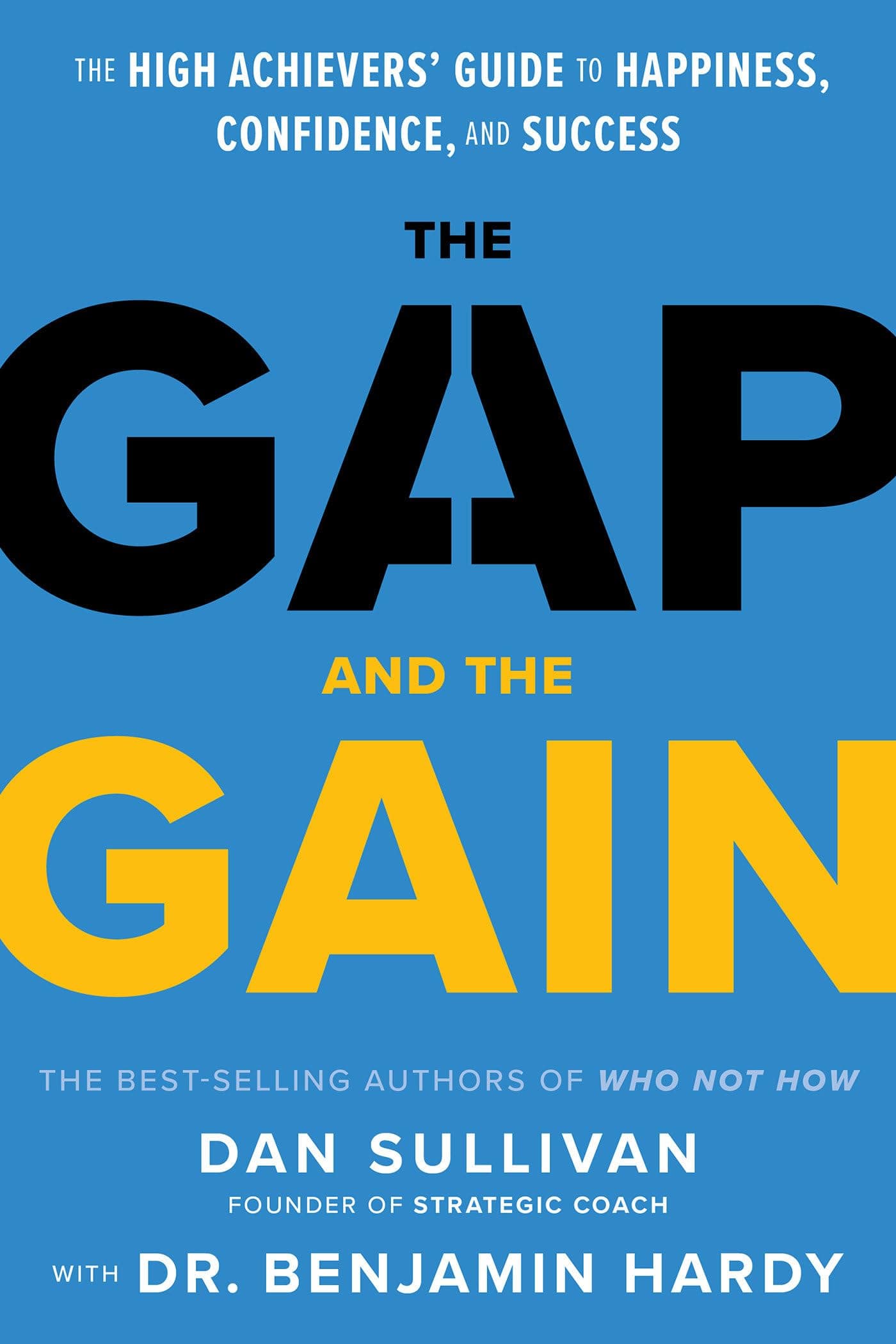
The Gap and The Gain
Dan Sullivan
Free download · 500+ book summaries
What is The Gap and The Gain about?
The book The Gap and the Gain is a guide to finding happiness and complete fulfillment. By learning to define success by your own standards and measuring your progress backwards, you will learn to appreciate how much progress you have really made so far. As a result, you'll approach new endeavors with renewed motivation.
Read an excerpt from the summary
The Trap Hidden Inside Every Goal
Dan Jansen spent ten years chasing one piece of metal. Four Olympics, hundreds of races, a string of world records along the way, and still no gold medal in the event he was supposed to dominate. By the time he lined up for the thousand-meter final in Lillehammer in 1994, the five-hundred-meter, the race that was supposed to be his, had already slipped through his fingers. He finished eighth. The thousand was an afterthought, the event he was weakest at. And then, in the minutes before the gun, something shifted. He stopped thinking about the medal he was supposed to win and started thinking about everything he had already received: the coaches, the friends, the countries he had skated through, the simple act of moving across ice at speeds most people will never feel. He told himself the race would be a thank-you and a goodbye. Then he broke the world record and won gold.
The book that grew out of moments like that one argues something almost unreasonably simple. Most ambitious people are unhappy not because they are failing, but because they are measuring in the wrong direction. Dan Sullivan, who has coached more than twenty thousand entrepreneurs through his company Strategic Coach over roughly four decades, watched the pattern repeat in client after client. They would describe a year of obvious wins, revenue up, team grown, a hard launch that finally landed, and then in the same breath erase the wins by comparing them to an imaginary version of themselves that should have done more. Sullivan started calling that move being in the GAP. Measuring forward, against the ideal. The cure, he claimed, was to measure backward instead, against where you started. He called that the GAIN. Benjamin Hardy, an organizational psychologist who became Sullivan's writing partner, holds a PhD in psychology and has read more than a thousand books on the subject; he says he has never encountered a framework that does more work per page than this one.
Like it?
Continue in the appRead it in 54 minutes
The summary of The Gap and The Gain and 500+ more books await in the BookBase app.