 English
 Magyar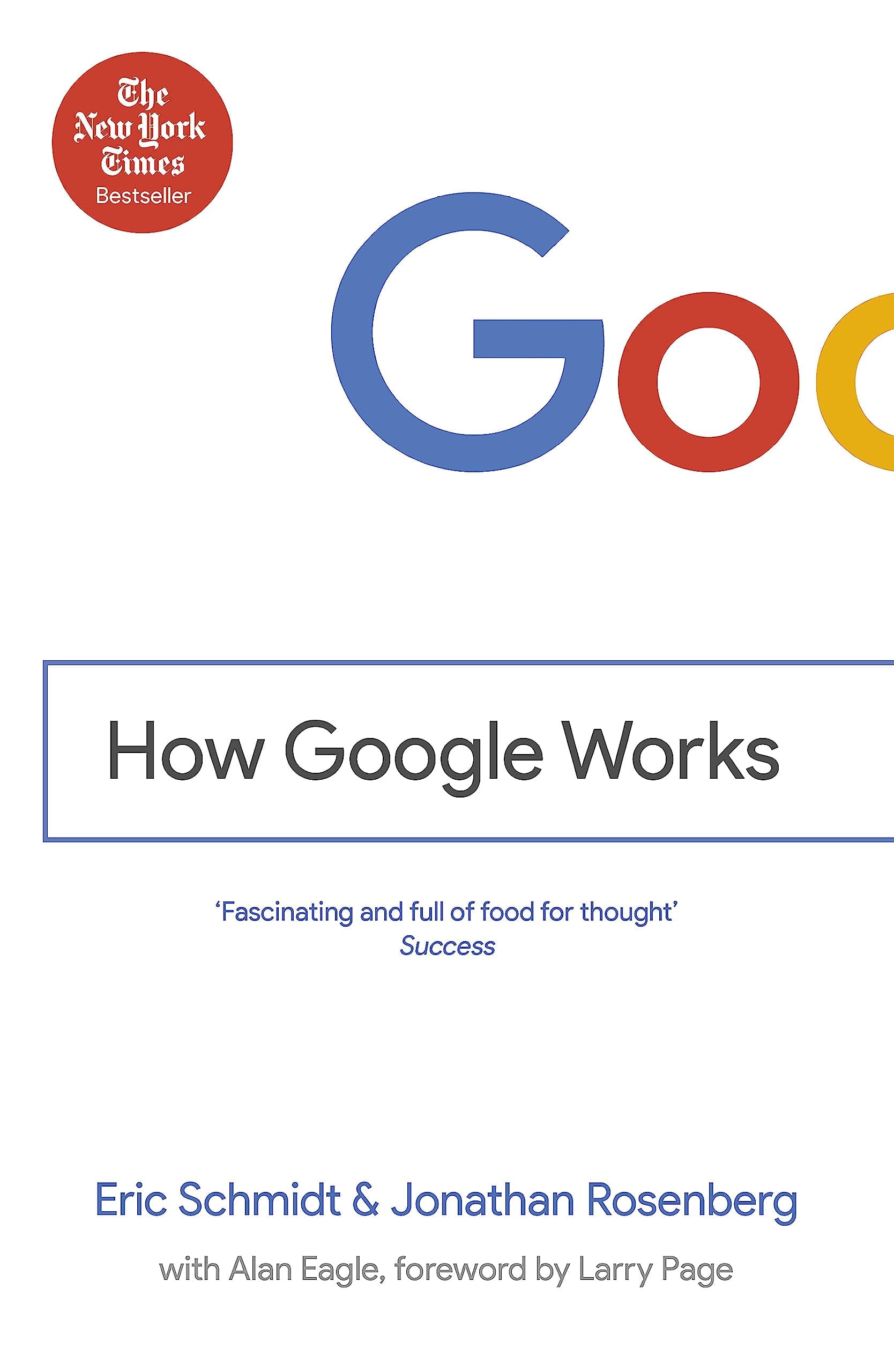
How Google Works
Eric Schmidt
Free download · 500+ book summaries
What is How Google Works about?
Eric Schmidt and Jonathan Rosenberg, both experienced Silicon Valley entrepreneurs, arrived at Google, but over the course of a decade, they realized that it was wise to heed coach John Wooden’s observation that "what matters is what you learn after you know it all." While helping Google evolve from a young start-up to a global icon, they relearned everything they knew about management. How Google Works is a summary of these experiences, presented as an entertaining, easy-to-read guide on corporate culture, strategy, talent, decision-making, communication, innovation, and handling disruptions.
Read an excerpt from the summary
The Finland Email
July 2003. Eric Schmidt opens an email from Mike Moritz, the Sequoia Capital partner who sits on Google's board, and reads a polite request that lands like a summons. Moritz wants three hours in mid-August to walk through a comprehensive Google business plan. Specifically, he wants to know what the company intends to do about Finland.
Finland was the internal code name for Microsoft.
At the time Google was a five-year-old startup with a few hundred employees, an advertising product called AdWords that had begun printing money, and an IPO already in the pipeline. It also had no business plan worth showing to a man like Moritz. There were no market projections, no channel strategy, no five-year forecast, no org chart, no product roadmap, no milestones. The company had a list — the Top 100 Projects spreadsheet, publicly visible, debated in semi-quarterly meetings, reshuffled whenever an engineer noticed something more interesting. That was the plan.
Schmidt and Jonathan Rosenberg, the head of products, faced a problem older than venture capital. The board wanted a real document. Google's culture would gag on a real document. Whatever they produced had to satisfy a famously demanding investor without insulting the founders, Larry Page and Sergey Brin, who had built the company on the suspicion that conventional management was, in Larry's word for Jonathan's first product plan, "stupid."
So they wrote something else. The Finland presentation, delivered that summer, said Google would win by focusing on users, building excellent platforms, shipping higher-quality services than anyone else, and trusting that the user base would pull the advertiser base along behind it. There were no spreadsheets. Microsoft would eventually spend an estimated eleven billion dollars trying to dislodge Google — through MSN Search, Windows Live, Bing, and the aQuantive acquisition — and none of it worked. Google grew into a fifty-billion-dollar company in forty countries, employing more than forty-five thousand people, and got itself added to the Oxford English Dictionary as a verb.
Like it?
Continue in the appRead it in 55 minutes
The summary of How Google Works and 500+ more books await in the BookBase app.