 English
 Magyar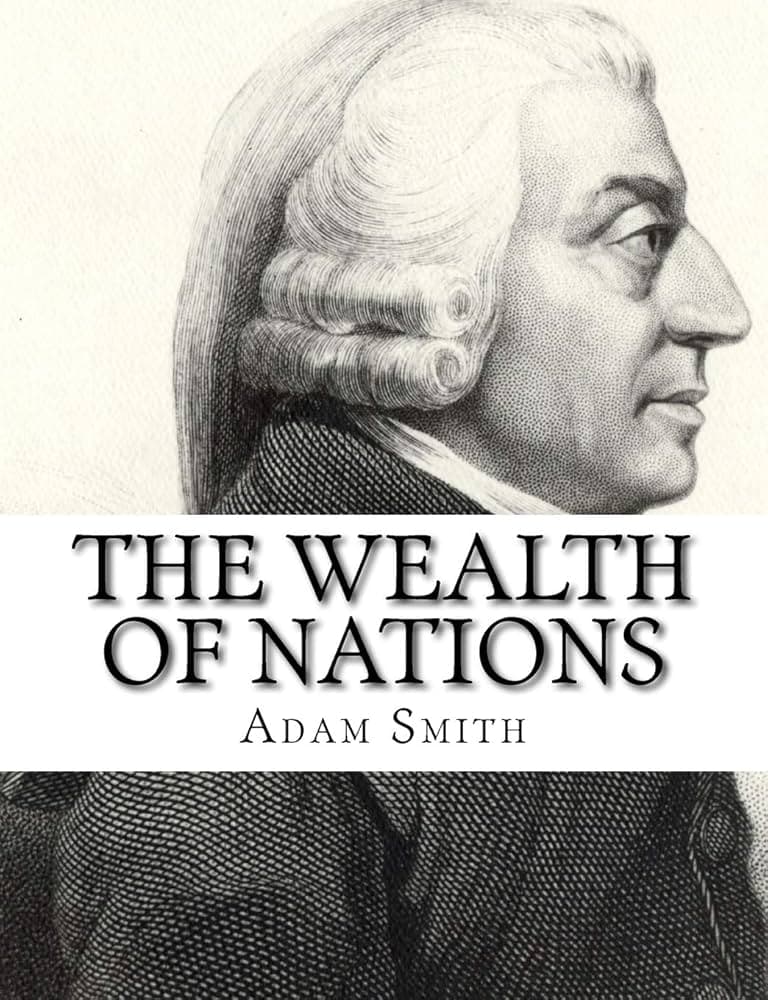
The Wealth of Nations
Adam Smith
Free download · 500+ book summaries
What is The Wealth of Nations about?
The Wealth of Nations examines exactly how nations become wealthy. Adam Smith argues that if individuals are free to pursue their own interests in the free market, without government regulation, nations will thrive.
Read an excerpt from the summary
A Scottish moral philosopher walked into a pin factory in 1776 and came out with the most consequential economic theory of the next two and a half centuries. Ten men, poorly equipped, were turning out forty-eight thousand pins a day. One man working alone, Adam Smith calculated, could not make twenty. That ratio — what specialization buys you when you let it run — became the seed of an idea that would dismantle the entire mercantile worldview Europe had operated under for generations.
Smith was not the first person to notice that trade made people richer. He was the first to explain why, mechanically and morally, it had to. The Wealth of Nations is best read as a long argument with the assumption of his era: that gold and silver were wealth, that nations grew rich by hoarding precious metals and beggaring their neighbors, that the king's ministers should choreograph commerce the way a conductor cues an orchestra. Smith said no. Wealth, he insisted, is the flow of useful goods and services available to the people who actually live in a country. Everything else — bullion, trade surpluses, tariffs, charters, guilds — is either a means to that end or an obstacle to it. Hold that distinction in mind. The whole book is a single argument running outward from it, and every later chapter — money, wages, profit, rent, regulation — turns on whether a given arrangement increases that flow of goods or strangles it.
The Pin Factory and the Multiplication of Human Effort
Smith opens his case with an image so concrete that two and a half centuries later it still does the work. A single craftsman, untrained in pin-making, could perhaps produce one pin in a day. Probably not even twenty. But split the job into eighteen distinct operations — drawing the wire, straightening it, cutting it, pointing it, grinding the top for the head, making the head, attaching it, whitening the pin, packaging the finished product — and assign each operation to a specialist, and ten men produce forty-eight thousand pins a day. That is four thousand eight hundred pins per worker, against the lone artisan's one. The productivity gain is not incremental. It is something close to a thousandfold.
Like it?
Continue in the appRead it in 56 minutes
The summary of The Wealth of Nations and 500+ more books await in the BookBase app.