 English
 Magyar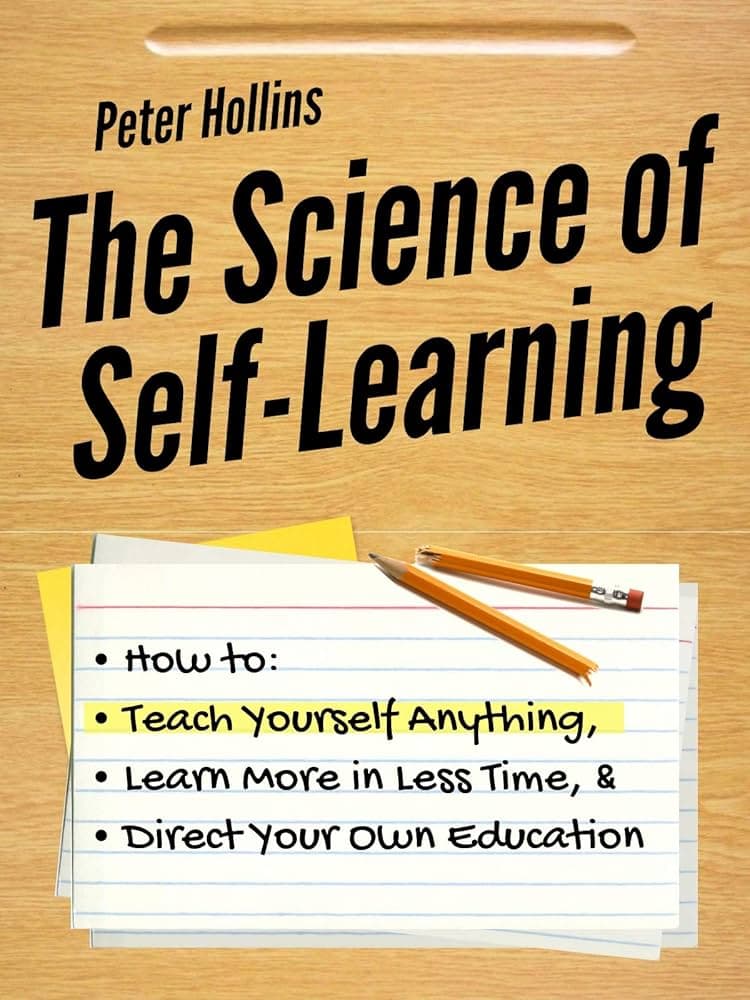
The Science of Self-Learning
Peter Hollins
Free download · 500+ book summaries
What is The Science of Self-Learning about?
To be a successful self-educating learner, you need discipline, motivation, as well as a well-defined approach and goal. Peter Hollins, a bestselling author, provides a guide that prepares the reader for the self-education journey, offering tools and tactics that make the process easier and more enjoyable.
Read an excerpt from the summary
The book in 3 sentences: It teaches you how to stay motivated through exhausting learning. Your learning ability determines whether you sink or swim. The SQ3R method serves to help you learn how to process different types of information. Favorite quotes: “Remember, the goal is not to be able to answer the questions, but to see what you can't answer.” “Self-discipline is needed in large doses because self-education is inherently not an enjoyable activity. It’s work.” “The whole world is my school, and all of humanity is my teacher.”
Key points:
Summary + notes: Self-directed learning offers many more advantages than traditional learning.
Education is about accreditation – jumping through institutional hoops to get a piece of paper proving you have the qualifications for a job. Schools have specific curriculums to follow. You might be more interested in something else, but can't dive deeper because there’s no time for it. In contrast, during self-improvement, you learn exactly what you want and as much as you want! The internet allows you to learn almost anything as self-education becomes more popular.
To become an "autodidact" – a self-learner – you need discipline and strategy to be successful. People often give up because they don’t know where to start, or they feel overwhelmed. However, these obstacles can be overcome.
> This book guides you through the steps of finding inspiration for learning, planning, creating positive habits, and taking control of your own learning. >
To understand the advantages of self-directed learning, let’s look at the disadvantages of traditional learning: You always have to be "on" – all your time must be dedicated to your subjects. Fear is used as motivation – Traditional learning teaches that you have no future if you don't get good grades. It limits creativity – There is a "right" and a "wrong" way to process a subject. It can narrow your perspective – Schools promote social hierarchies and conformist thinking. It hinders future learning – Burnout is common, and it holds students back from independent learning.
Like it?
Continue in the appRead it in 12 minutes
The summary of The Science of Self-Learning and 500+ more books await in the BookBase app.