 English
 Magyar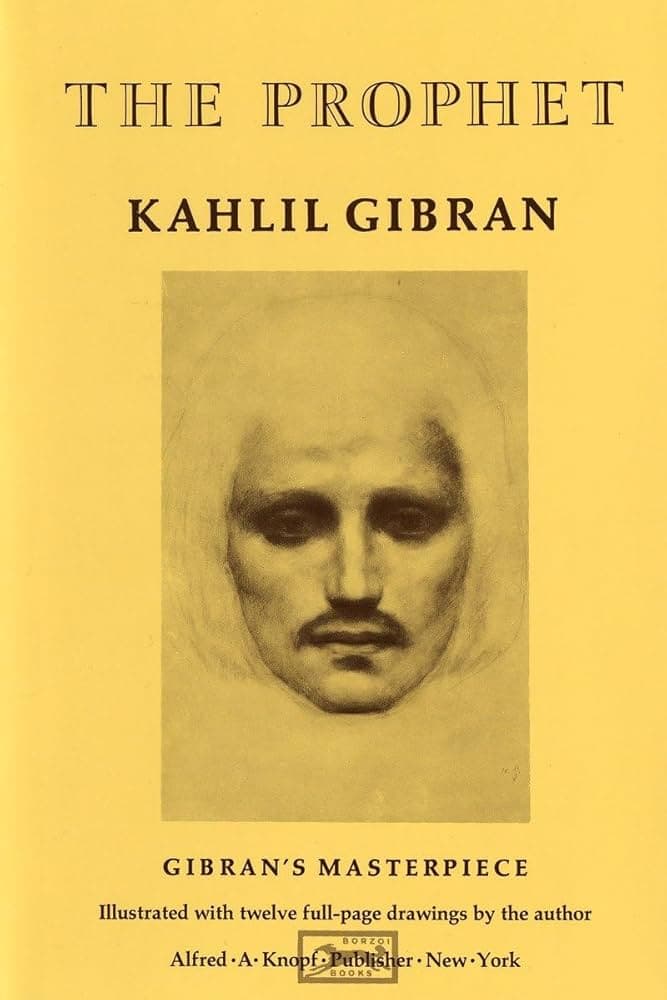
The Prophet
Kahil Gibran
Free download · 500+ book summaries
What is The Prophet about?
The Prophet follows Almustafa’s prophets during his departure from the fictional city of Orphalese. While the community bids farewell to Almustafa at the harbor, they ask him to share some final morsels of wisdom from the deep well of his mind. What follows is a collection of profound insights about the different aspects of life and human existence.
Read an excerpt from the summary
The Ship Comes In
A man named Almustafa has been waiting twelve years. He came to the city of Orphalese as a stranger, became something more, and has lived among its people while watching the harbor for one specific sail. On the seventh day of Ielool — the month of reaping — he climbs the hill outside the city and sees the mist parting around a ship that has finally arrived to carry him back to the island where he was born.
You might expect joy. Instead, he weeps.
"How shall I go in peace and without sorrow?" he asks himself. "Nay, not without a wound in the spirit shall I leave this city. It is not a garment I cast off this day, but a skin that I tear with my own hands."
This is the situation Kahlil Gibran sets up in the opening pages of *The Prophet*, published in 1923 by a Lebanese immigrant writing in his second language from a studio in New York. The book is short — barely a hundred pages — and its structure is almost embarrassingly simple. A man is about to leave. Before he sails, the people of his adopted city gather around him and ask him to speak. He answers their questions about love, marriage, work, pain, death, and twenty-three other things. Then he gets on the boat.
That is the whole book. And yet for a hundred years it has refused to go out of print, has been quoted at weddings and funerals across every continent, has sold more than nine million copies in English alone, and has been smuggled into prison cells, monasteries, and the love letters of teenagers who could not articulate what they felt until Gibran put it into a metaphor for them.
The reason it endures is not because Gibran has answers. He does not, and he says so. The reason is that he asks the questions the way a friend asks them — late at night, after the dinner plates are cleared, when you finally stop pretending and admit you don't know what you're doing with your life. Almustafa speaks the way that friend speaks. He never lectures. He never moralizes. He turns each question into a small image — a bow and an arrow, a sea between two shores, a flute through which the wind blows — and trusts you to feel the rest.
Like it?
Continue in the appRead it in 53 minutes
The summary of The Prophet and 500+ more books await in the BookBase app.