 English
 Magyar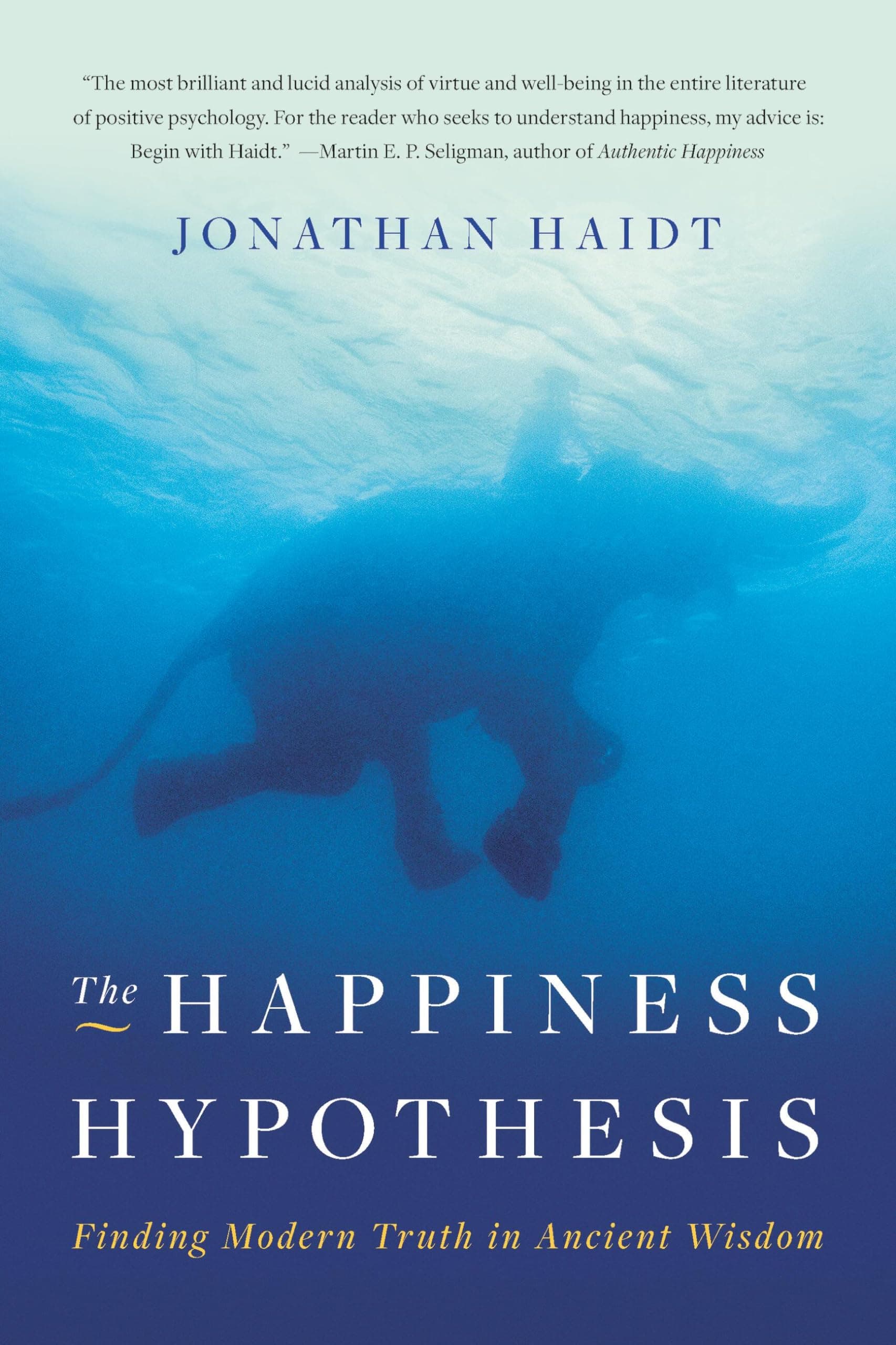
The Happiness Hypothesis
Jonathan Haidt
Free download · 500+ book summaries
What is The Happiness Hypothesis about?
In The Happiness Hypothesis, Jonathan Haidt examines the thoughts of famous ancient philosophers in light of modern knowledge, and uses scientific findings to answer the question, "What makes people happy?"
Read an excerpt from the summary
A horse on a narrow trail in the Great Smoky Mountains is about to walk off a cliff. Jonathan Haidt, then a graduate student on a group ride, sits frozen in the saddle. He knows the right thing to do — yank the reins, turn the animal — but he is more afraid of looking foolish in front of strangers than of falling. Five long seconds pass. Then the horse, unprompted, takes the turn on its own. It knew the trail. It was the rider who didn't know what he was doing.
That moment became the seed of a book about why we so often see the right path and walk the wrong one anyway. *The Happiness Hypothesis* is Haidt's attempt to take the ten or twelve great claims about human flourishing that show up everywhere — in the Upanishads, in Marcus Aurelius, in Jesus, in Buddha, in Benjamin Franklin's almanacs — and test each one against the messy evidence of modern psychology. Some hold up. Some collapse. Some need surgery before they can carry weight.
The book's master metaphor sits underneath everything else: the human mind is a small rider perched on the back of a very large elephant. The rider is conscious reason. The elephant is everything else — gut feelings, snap judgments, ingrained habits, automatic loves and fears. The rider thinks he's in charge. The elephant knows better.
The Divided Self
The rider-and-elephant image is not just charming. It does real work, because almost every old tradition Haidt examines reaches for some version of it. Plato had a charioteer with two horses, one noble and one a "crooked great jumble of limbs." Buddha described the mind as a wild elephant the trainer must learn to guide. Saint Paul wrote about the war between flesh and spirit. Freud had ego, id, and a hectoring superego in the back seat. Ovid's Medea cries that she sees the right way and follows the wrong one anyway. None of these writers had brain scanners. All of them noticed the same thing: a person is not a unified self. A person is a council, and the chairman has limited authority.
Like it?
Continue in the appRead it in 57 minutes
The summary of The Happiness Hypothesis and 500+ more books await in the BookBase app.