 English
 Magyar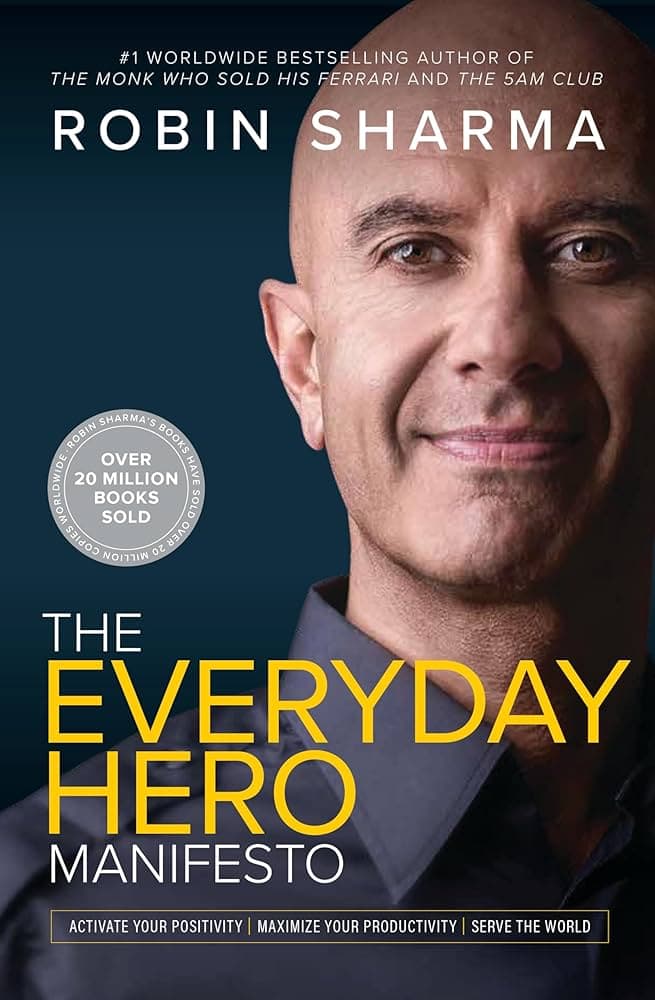
The Everyday Hero Manifesto
Robin Sharma
Free download · 500+ book summaries
What is The Everyday Hero Manifesto about?
The Everyday Hero Manifesto is a guide to becoming the hero of your own life. It is filled with detailed plans, short essays, anecdotes, and even poems that help you become happier, more productive, and successful.
Read an excerpt from the summary
The Manifesto
Robin Sharma's editor wrote him a letter that opened: "There are major problems with The Monk Who Sold His Ferrari, Robin. There's no use mincing words." Sharma sat in his car outside the editor's red-brick house with its neatly trimmed hedges, heart pounding, palms sweating. He had quit a successful litigation career, printed his book at a 24-hour copy shop with his father driving him there at four in the morning, and watched 21 of the 23 attendees at his first seminar turn out to be family members. A famous author had pulled him aside earlier and said: "This is a hard business. Very few ever make it. You have a good job as a lawyer. You should stay with that."
He kept going anyway. That stubbornness is the whole book.
The Everyday Hero Manifesto is Sharma's long argument that heroism does not belong only to Mandela, Harriet Tubman, Gandhi, Florence Nightingale, and Oskar Schindler. It also belongs to the teacher in your kid's school, the restaurant worker who remembers your usual order, the parent who keeps showing up tired, the first responder who walks toward the screaming. A hero, in Sharma's definition, is an ordinary person who has decided to live in an extraordinary way. Heroism is not a personality trait you're born with. It's a trained result. That single reframe — genius is habit, not genetics — is the spine of every chapter that follows.
The book is also Sharma's most personally revealing. He calls it a manual for supreme productivity, elite performance, sustained happiness, and unusual service to society, but it reads more like a long, unhurried conversation with someone who has been thinking about how to live well for thirty years and finally feels like writing it all down. Mark Twain opens the epigraphs with a punch: "Thousands of geniuses live and die undiscovered — either by themselves or by others." Rosa Parks follows: "The only tired I was, was tired of giving in." That is the register of the book — sharp, generous, occasionally sentimental, and unembarrassed about being inspirational in a culture that has decided sincerity is uncool.
Like it?
Continue in the appRead it in 55 minutes
The summary of The Everyday Hero Manifesto and 500+ more books await in the BookBase app.