 English
 Magyar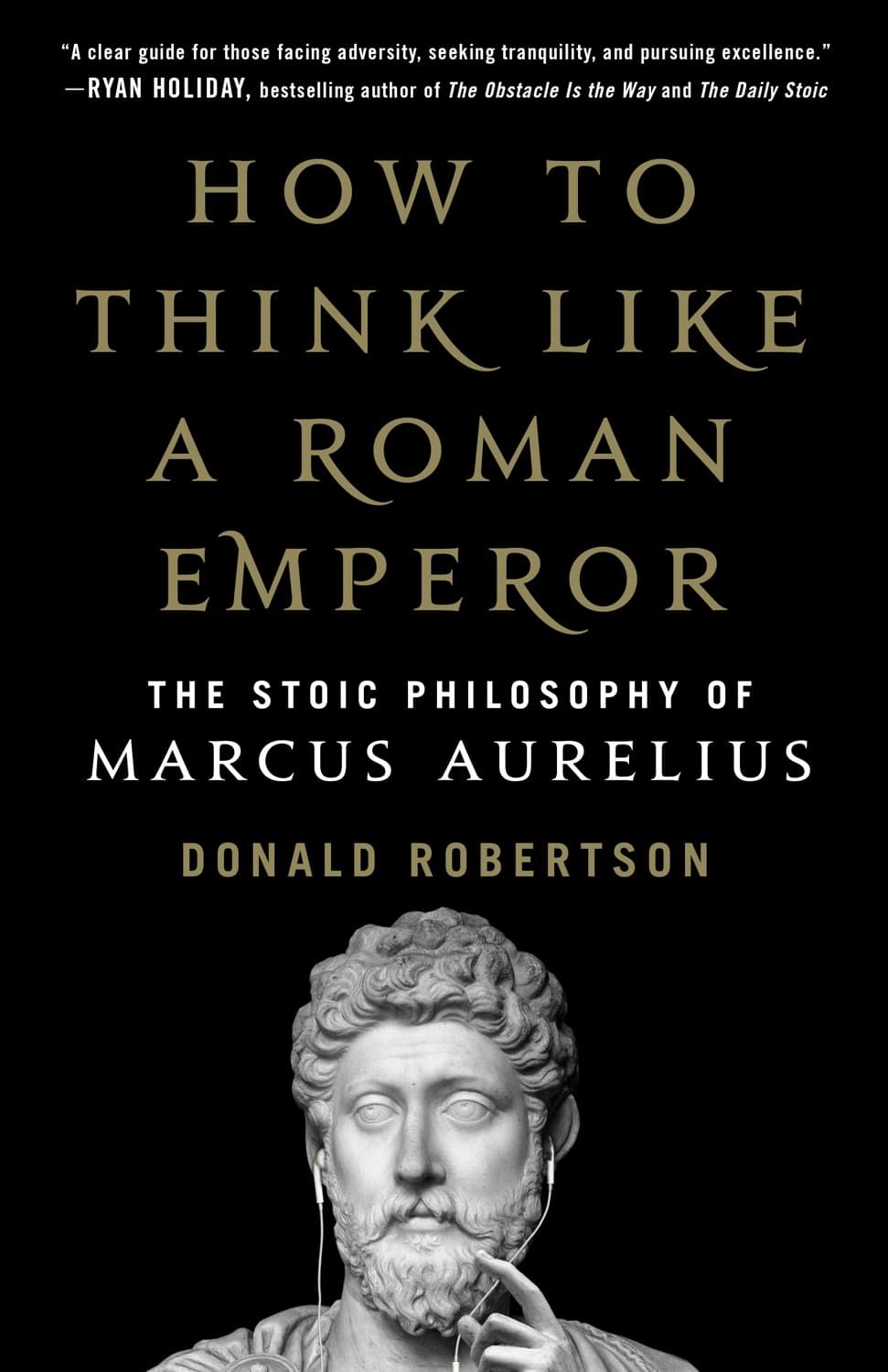
How to Think Like a Roman Emperor
Donald Robertson
Free download · 500+ book summaries
What is How to Think Like a Roman Emperor about?
What can a 2,000-year-old emperor teach us about modern resilience? Donald Robertson weaves the life of Marcus Aurelius with practical Stoic exercises drawn from cognitive behavioral therapy. Part biography, part philosophy, part field guide. A grounded, deeply useful approach to managing emotion, adversity, and the daily friction of being human.
Read an excerpt from the summary
How to Think Like a Roman Emperor
The man dying in the tent at Vindobona did not look like the most powerful person on earth. He was fifty-eight years old, which in the second century CE was already old. His face had gone gaunt. The smallpox that had been spreading through his legions for years had finally come for the emperor himself. It was March of 180 CE, and the Roman camp at what is now Vienna was cold and grey, the Danube barely a mile away, the Germanic frontier still unsettled after nearly two decades of war. Marcus Aurelius, emperor of Rome since 161 CE, was dying the way he had lived: at the edge of the empire, surrounded by soldiers, a long way from comfort.
His son Commodus was there. Marcus had watched Commodus closely his whole life and seen what he was. He knew what would happen to Rome after he was gone. And still, according to the ancient sources, when a tribune came to his bedside and asked for the watchword -- the daily password given to the garrison -- the emperor did not answer with anything poetic or consoling. He gave a watchword. He said: go to the rising sun, for I am already setting. Then he turned over, pulled the blankets up, and died.
The tent full of notebooks stayed behind. In the camps along the Danube, during campaigns that most emperors would have delegated to generals, Marcus had been writing. Not policy documents or imperial dispatches. Private reflections, addressed to himself, in Greek, titled Ta eis heauton -- roughly, "things addressed to himself." We know them as the Meditations. And for nearly two millennia they have been read as one of the most honest documents ever left by a human being in a position of total power.
Like it?
Continue in the appRead it in 55 minutes
The summary of How to Think Like a Roman Emperor and 500+ more books await in the BookBase app.