 English
 Magyar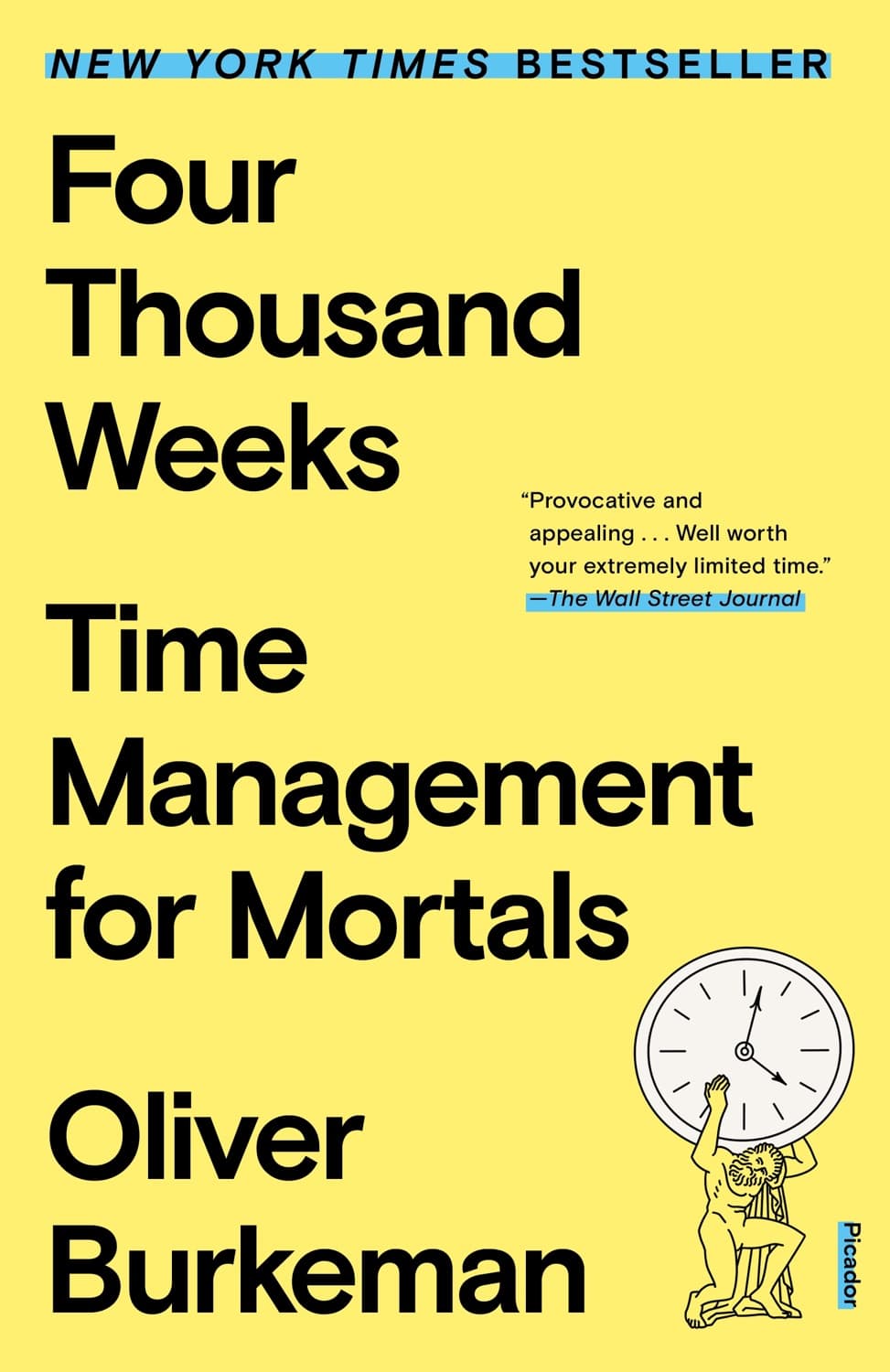
Four Thousand Weeks
Oliver Burkeman
Free download · 500+ book summaries
What is Four Thousand Weeks about?
The average human life is roughly four thousand weeks long. Oliver Burkeman argues that no productivity hack can rescue you from this fact, and that accepting it is the start of actually living well. A thoughtful counter to the modern cult of optimization, and a quiet plea to spend your finite time on what truly matters.
Read an excerpt from the summary
Four Thousand Weeks
Oliver Burkeman spent seventeen years writing a productivity column for The Guardian. Every week, readers sent him their problems -- too much to do, too little time, calendars packed like subway cars at rush hour -- and every week he sent back tips. Better to-do lists. Morning routines. Inbox-zero strategies. Systems for batching tasks, blocking time, protecting focus. He believed, with the sincerity of someone who had read every self-help book on the shelf, that the solution to the overwhelm of modern life was more efficiency. Get faster. Get smarter. Get more done in the same hours. Then the hours would feel like enough.
They never did.
Sometime around his mid-thirties, Burkeman sat at his desk in London staring at a to-do list that had grown, over the previous decade of productivity optimization, from one page to something that scrolled off the bottom of the screen. He had tried every system in the canon. He had read David Allen's Getting Things Done. He had used the Pomodoro Technique. He had blocked his mornings, batched his email, turned off notifications. And still, for every item he crossed off the list, three more appeared. The inbox hit zero and refilled within the hour. The calendar cleared and immediately filled with new commitments. He was running at full speed and going nowhere. The more efficient he became, the more demands landed on his plate, which required more efficiency, which created more capacity for demands, which required still more efficiency. It was a treadmill disguised as a ladder.
What Burkeman realized -- slowly, reluctantly, and with the specific despair of someone who had bet their professional reputation on the opposite being true -- is that this was not a problem of execution. No system was ever going to solve it. The problem was the premise. The assumption that with the right tools, you could eventually get on top of everything, handle every obligation, pursue every ambition, and still have time left over for the life you actually wanted to live. That assumption is false. And the reason it is false is very simple: you are going to die.
Like it?
Continue in the appRead it in 52 minutes
The summary of Four Thousand Weeks and 500+ more books await in the BookBase app.