 English
 Magyar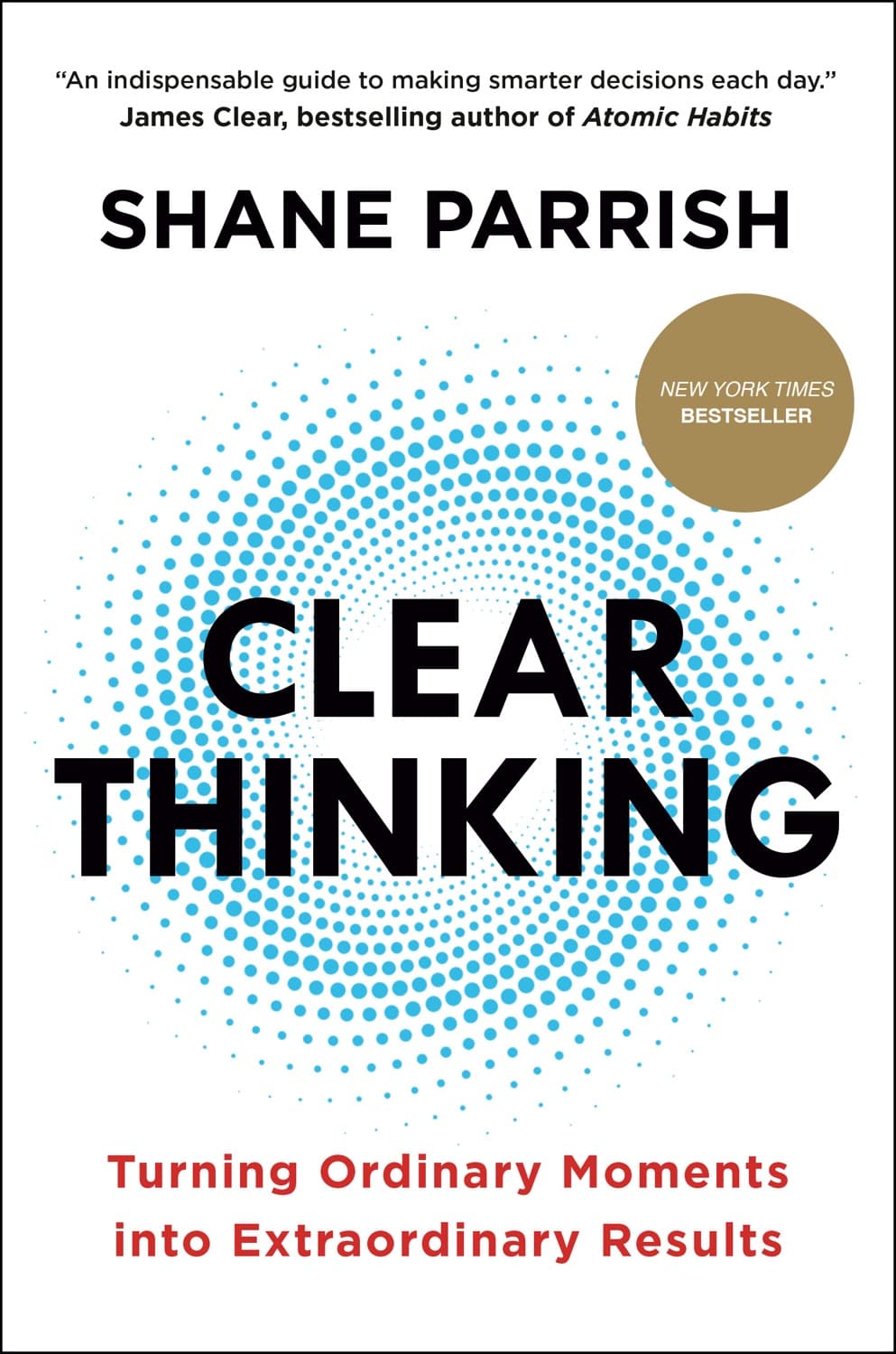
Clear Thinking
Shane Parrish
Free download · 500+ book summaries
What is Clear Thinking about?
Good decisions are not made in the heat of the moment. Neither are bad ones. The difference is the groundwork you put in months before, when no one is watching. Shane Parrish, founder of Farnam Street, names four emotional defaults that destroy clarity (emotion, ego, social, inertia) and walks through a practical system to disarm them before they fire.
Read an excerpt from the summary
Clear Thinking
*Shane Parrish*
Most people assume that bad outcomes come from bad decisions. That is a comforting story, because it implies the fix is simple: just decide better next time. But Shane Parrish spent years at a US intelligence agency watching smart, trained professionals make catastrophic errors, and he noticed something uncomfortable. The problem was rarely the quality of people's reasoning. The problem was that they didn't know they were supposed to be reasoning at all. The moment that mattered had come and gone before anyone recognized it as a moment that mattered. They had reacted on autopilot, and by the time their deliberate minds engaged, the damage was done.
This is the insight at the heart of Clear Thinking. It is not a book about cognitive biases or logical fallacies. It is a book about something more fundamental: the invisible gap between stimulus and response, and what fills it. In that gap, one of two things happens. Either you pause and apply judgment. Or biology takes over and executes a default behavior on your behalf. The enemy of clear thinking is not irrationality. It is the failure to notice that thinking is required. Your brain, doing exactly what evolution designed it to do, acts quickly and efficiently to neutralize threats, preserve your position in the social hierarchy, and avoid the discomfort of change. Most of the time, in a modern context, those instincts work against you.
The book's central organizing metaphor is positioning. Think of Tetris. When you play well, you have many options for where to place the next piece. When you play poorly, you are praying for one specific piece, and anything else is a catastrophe. Life works the same way. Good positioning means many paths to a good outcome. Poor positioning means one path, if any, and no margin for error. "You don't need to be smarter than others to outperform them if you can out-position them." What most people miss is that positioning is not determined by the big visible choices. It is determined by the ordinary moments, the split-second reactions, the small daily defaults, the accumulated texture of routine behavior. A CEO who screams at someone flagging a problem, not because he is a bad decision-maker but because he doesn't know that this phone call, this moment, requires judgment rather than reaction, has just weakened his position. The caller escalates to the board. The CEO is fired. One ordinary moment changed everything.
Like it?
Continue in the appRead it in 45 minutes
The summary of Clear Thinking and 500+ more books await in the BookBase app.